
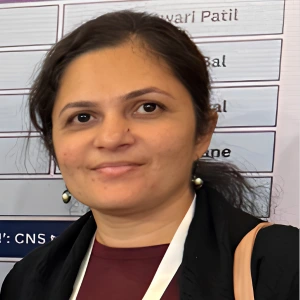
Trupti Jansari
Sumandeep Vidyapeeth Deemed To Be University, IndiaPresentation Title:
A study exploring the roles of desmoplastic reaction, tumor budding, tumor infiltrating lymphocytes, and depth of invasion as potential predictive parameters for extranodal extension in oral squamous cell carcinoma
Abstract
Background: Head and neck squamous cell carcinomas constitute the eighth most common malignancy worldwide. Desmoplastic reaction (DR), tumor budding (TB), tumor infiltrating lymphocytes (TILs), and depth of invasion (DOI) are some of the histological predictors of extranodal extension (ENE) and poor prognosis. In this study, we aimed to investigate their association in oral squamous cell carcinoma (OSCC).
Materials and Methods: This retrospective analytical study included 329 specimens of OSCC from our hospital. All data were collected from the histopathological records (e.g., age, gender, diagnosis, lymph node metastasis, ENE, DR, TB, TILs, and DOI). The datasets were analyzed using the Chi square test and GraphPad InStat 3 software.
Results: The majority of cases were seen in the age group of ≥60 years (221/329, 67.17%). Out of 35 ENE-positive patients, 31 (88.6%) had progressive OSCC. We found a significant association between immature DR (DR I), high TB (TB H), and low TILs with pathological DOI (pDOI) >10 mm (P value: <0.0001, 0.001, and < 0.001, respectively). There was a significant association between DR, TB, and TILs at the primary site with that of the ENE sites (P value: 0.02, 0.002, and 0.001, respectively). TB H and pDOI >10 mm were the independent variables for the prediction of ENE (95% confidence interval [CI] = 1.07–4.95, P value: 0.003 and 95% CI = 1.11–1.52, P value: 0.0008, respectively). TB H and pDOI >10 mm showed the highest sensitivity (85.1% and 97.1%, respectively), and DR I exhibited the highest specificity (83.8%) for the presence of ENE.
Conclusion: Detecting ENE not only predicts outcomes but also influences the treatment strategies and quality of life.
Biography
Dr. Trupti Jansari has completed her MBBS and MD in Pathology from Government Medical College, Bhavnagar, Gujarat. She has completed her Oncopathology fellowship from Gujarat Cancer and Research Institute, Ahmedabad, Gujarat. She has also cleared her DNB Pathology. Currently, she is working as an Associate Professor at Sumandeep Vidyapeeth Deemed to be University, Vadodara, Gujarat, India. She has a post MD experience of 12 years in the field of Surgical Pathology. She has over 30 publications in her name in various reputed journals.

Organization Location
1309 Coffeen Avenue, STE 1200, Sheridan, Wyoming 82801 USA
General Enquiry
contact@scientexconferences.com
Finance Enquiry
finance@scientexconferences.com
Call us at
USA : (+1) 323 677 0554