
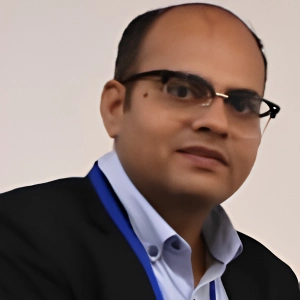
Jagmohan Lal Meena
ACTREC - Tata Memorial Centre, IndiaPresentation Title:
Rehabilitation for head and neck cancer-related lymphedema: Evidence-based assessment, comprehensive management, and clinical outcomes
Abstract
Abstract
Background: Head and neck cancer-related lymphedema is a potentially debilitating complication following cancer surgery, radiotherapy, and multimodal treatment. Accumulation of protein-rich interstitial fluid can result in facial and neck swelling, tissue fibrosis, restricted cervical mobility, discomfort, and functional impairments. Internal lymphedema involving the tongue, pharynx, and laryngeal structures may affect swallowing, speech, and airway function, thereby compromising quality of life and cancer survivorship.
Objective: To describe evidence-based approaches to the assessment and rehabilitation of head and neck cancer-related lymphedema, emphasizing comprehensive management, functional recovery, and patient-centred clinical outcomes, including the evaluation and management of tongue lymphedema.
Methods: This presentation reviews published literature on the assessment and rehabilitation of head and neck cancer-related lymphedema, incorporating findings from published work on tongue lymphedema. Assessment approaches include clinical examination, standardized external lymphedema grading, circumferential measurements where appropriate, evaluation of tissue changes and cervical mobility, and specialist assessment of internal lymphedema, including endoscopic evaluation when indicated. Swallowing, speech, functional performance, patient-reported symptoms, and health-related quality of life are also considered. Rehabilitation strategies include complete decongestive therapy, manual lymphatic drainage, individualized compression when clinically appropriate, therapeutic exercises, skin care, patient education, and self-management. Internal lymphedema requires individualized, multidisciplinary assessment and management.
Results: Published evidence suggests that individualized rehabilitation, particularly complete decongestive therapy, may reduce external lymphedema and improve tissue mobility, symptoms, and selected functional outcomes. The publication by Meena et al. (2025) specifically addresses the evaluation, management, and outcomes of tongue lymphedema, contributing to the clinical understanding of this specialized area of head and neck cancer rehabilitation. However, rehabilitation protocols, outcome measures, and study designs vary, and evidence regarding internal lymphedema and long-term outcomes remains limited. Standardized assessment and longitudinal monitoring are important for evaluating treatment response and guiding ongoing care.
Conclusion: Early recognition, comprehensive assessment, and individualized rehabilitation are important components of supportive care for people with head and neck cancer-related lymphedema. Integrating occupational therapy and multidisciplinary rehabilitation into cancer care may help address oedema-related impairments, support functional participation, and improve quality of life. Further high-quality research using standardized assessment tools and patient-centred outcomes is needed to establish optimal rehabilitation protocols and long-term effectiveness.
Keywords: Head and neck cancer; cancer-related lymphedema; head and neck lymphedema; tongue lymphedema; occupational therapy; complete decongestive therapy; manual lymphatic drainage; rehabilitation; quality of life; survivorship.
Biography
Jagmohan Lal Meena is an experienced Occupational Therapy and Cancer Rehabilitation professional with 25 years of experience in multispecialty rehabilitation, including more than 16 years of specialized experience in cancer rehabilitation and lymphedema management at Tata Memorial Hospital and ACTREC, Tata Memorial Centre. He holds a Master of Occupational Therapy (MOT) from Seth GS Medical College & KEM Hospital, Mumbai, and is a Certified Lymphedema Therapist (CLT) from the UK and USA. He currently serves as Associate Professor and In-Charge of the Department of Occupational Therapy at ACTREC–Tata Memorial Centre, Navi Mumbai. He has authored and contributed to several publications and regularly serves as a speaker and faculty member at national and international conferences in oncology and rehabilitation. He has played a pioneering role in the development and establishment of the Department of Occupational Therapy at ACTREC–Tata Memorial Centre. He is the founding In-Charge of the “TMC Advanced Clinical Fellowship in Occupational Therapy(Oncology)" at ACTREC–TMC and is actively involved in “OTCAN REHAB”, an academic initiative dedicated to advancing cancer rehabilitation and Occupational Therapy. He has also been involved in organizing the 1st International Breast Cancer Rehabilitation Summit at ACTREC- TMC. He is committed to advancing evidence-based Occupational Therapy in cancer care, spanning prehabilitation, acute rehabilitation, survivorship, and palliation, with the ultimate goal of optimizing function, participation, independence, and quality of life for people living with and beyond cancer.

Organization Location
1309 Coffeen Avenue, STE 1200, Sheridan, Wyoming 82801 USA
General Enquiry
contact@scientexconferences.com
Finance Enquiry
finance@scientexconferences.com
Call us at
USA : (+1) 323 677 0554